
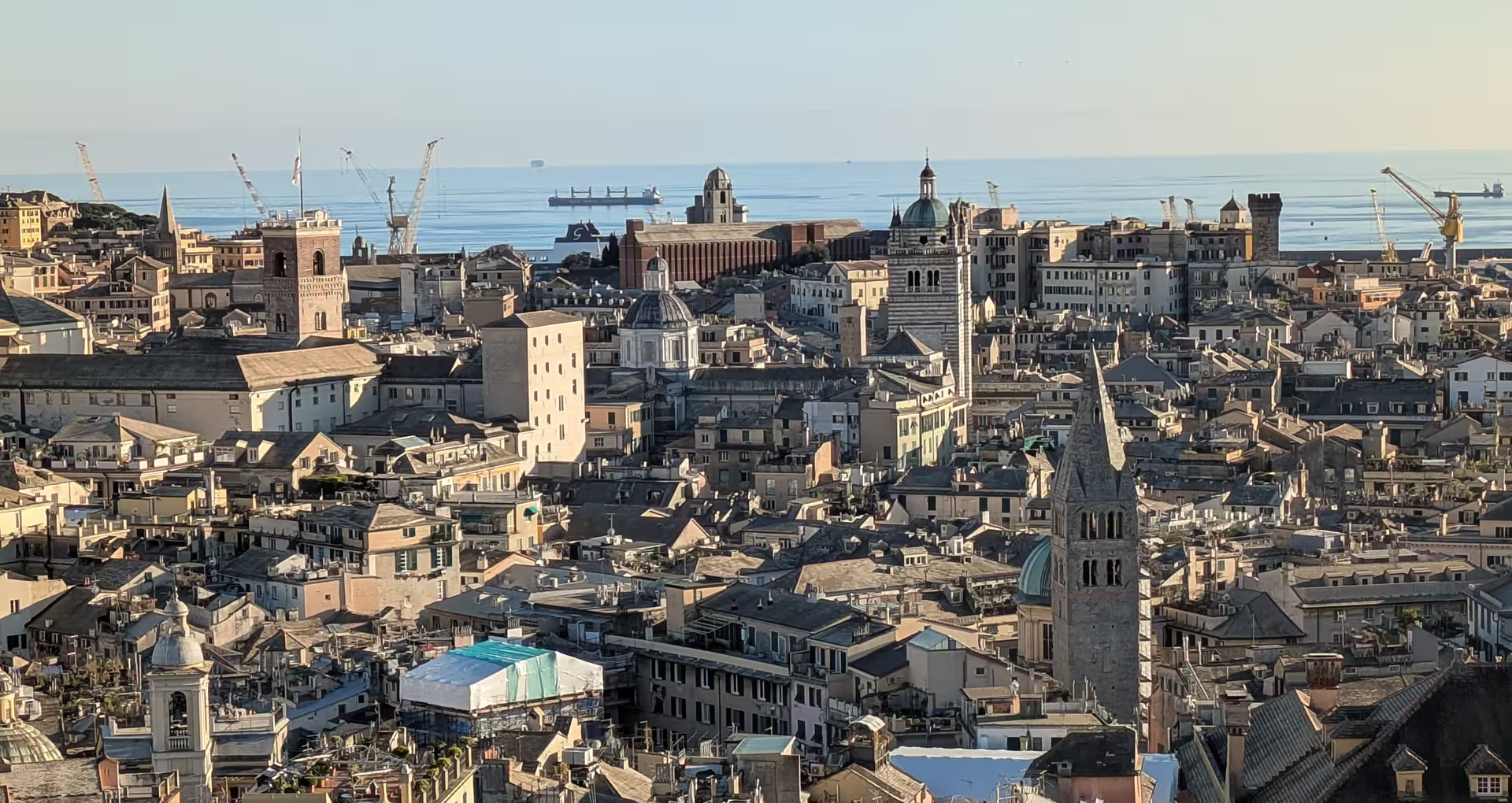
Genoa doesn’t hand itself over on the first afternoon. It’s a working port city, not a polished open-air museum — loud, vertical, a little secretive — and that’s exactly why it rewards you more than the postcard towns down the coast. After a year of living here and getting lost in it on purpose, this is my honest, curated guide to the best things to do in Genoa: what’s genuinely worth your time, what I’d quietly skip, and how to fit it together. Use the map and the “if you only do five things” box to get going fast, then dig into whichever section fits your trip.
If you only do 5 things
Walk Via Garibaldi and step inside a Rolli palace — Europe’s most concentrated street of aristocratic palaces. → [Via Garibaldi & the Rolli]
Get lost in the caruggi — the tallest, densest medieval old town in Europe; this is the real Genoa. → [Self-guided caruggi walk]
Stand under the striped Cathedral of San Lorenzo — and find the unexploded WWII shell still inside. → [San Lorenzo guide]
Watch the sun go down from a belvedere — the whole city, port and sea from above. → Best belvederes & viewpoints
Eat focaccia properly — at a bakery, in the morning, standing up. → [What to eat in Genoa]
1. The essentials, if you only have a day.
Genoa isn’t a city you can really get a hand on in a short time – it gives itself up slowly, and several days are easily filled. So don’t mistake a day here for “seeing Genoa”; you won’t, and that’s fine. But if your time is tight, these six hit the core: the palaces, the medieval maze, the cathedral, the port, a view and the food. And you can string them into a single full day on foot.
Walk Via Garibaldi and the Rolli Palaces. One street opened in the sixteenth-century, lined with the palaces of Genoa’s merchant dynasties — so grand the city once used them to host visiting royalty with the unique system of the Rolli. Several are now museums you can walk straight into. Start here; nothing else explains Genoa’s old wealth so fast.
Free to walk; museums ~€9. → [The Rolli Palaces] · → Palazzo Lercari-Parodi
Get lost in the caruggi. The narrow alleys of the old town – canyon-like, sunless at noon, opening without warning onto a tiny piazza or a Baroque church. On a hot day you’ll be grateful for their coolness; either way they drop you straight into a medieval, faintly oppressive atmosphere that’s pure Genoa. Don’t over-plan it; the wandering is the attraction – and it’s exactly how you stumble on the city’s hidden corners.
Free; daytime is best for a first visit. → [Self-guided walk through the caruggi]
Porto Antico and the Aquarium. Renzo Piano’s redeveloped old harbour is where Genoa meets the water — and home to Italy’s largest aquarium, the city’s biggest single draw and a near-guaranteed win with kids. The waterfront also has easy options for a drink or an aperitivo close to the sea, and an Eataly for food and souvenirs.
Aquarium ~€29; book online to skip the line. → [Aquarium guide]
Porto Antico and the Aquarium. Renzo Piano’s redeveloped old harbour is where Genoa meets the water — and home to Italy’s largest aquarium, the city’s biggest single draw and a near-guaranteed win with kids. Aquarium ~€29; book online to skip the line. On the port, nice options for a drink or an aperitivo close to the water, and the Eataly to bring back some food or souvenirs.
→ [Aquarium guide]
A view from a belvedere. Genoa rises up a steep amphitheatre, so the views are everywhere and mostly free — you just climb, or take a lift. Belvedere Castelletto is the easy classic, reached by an Art Nouveau lift and the perfect spot to have a gelato and watch the city below. → Best belvederes & viewpoints
Focaccia, pesto, farinata and aperitivo. This is a food city, and the staples are cheap. Warm focaccia from a bakery, pesto the way it was invented here, and farinata — a chickpea pancake — from an old sciamadda. → [What to eat in Genoa]
2. Art & the Rolli Palaces.
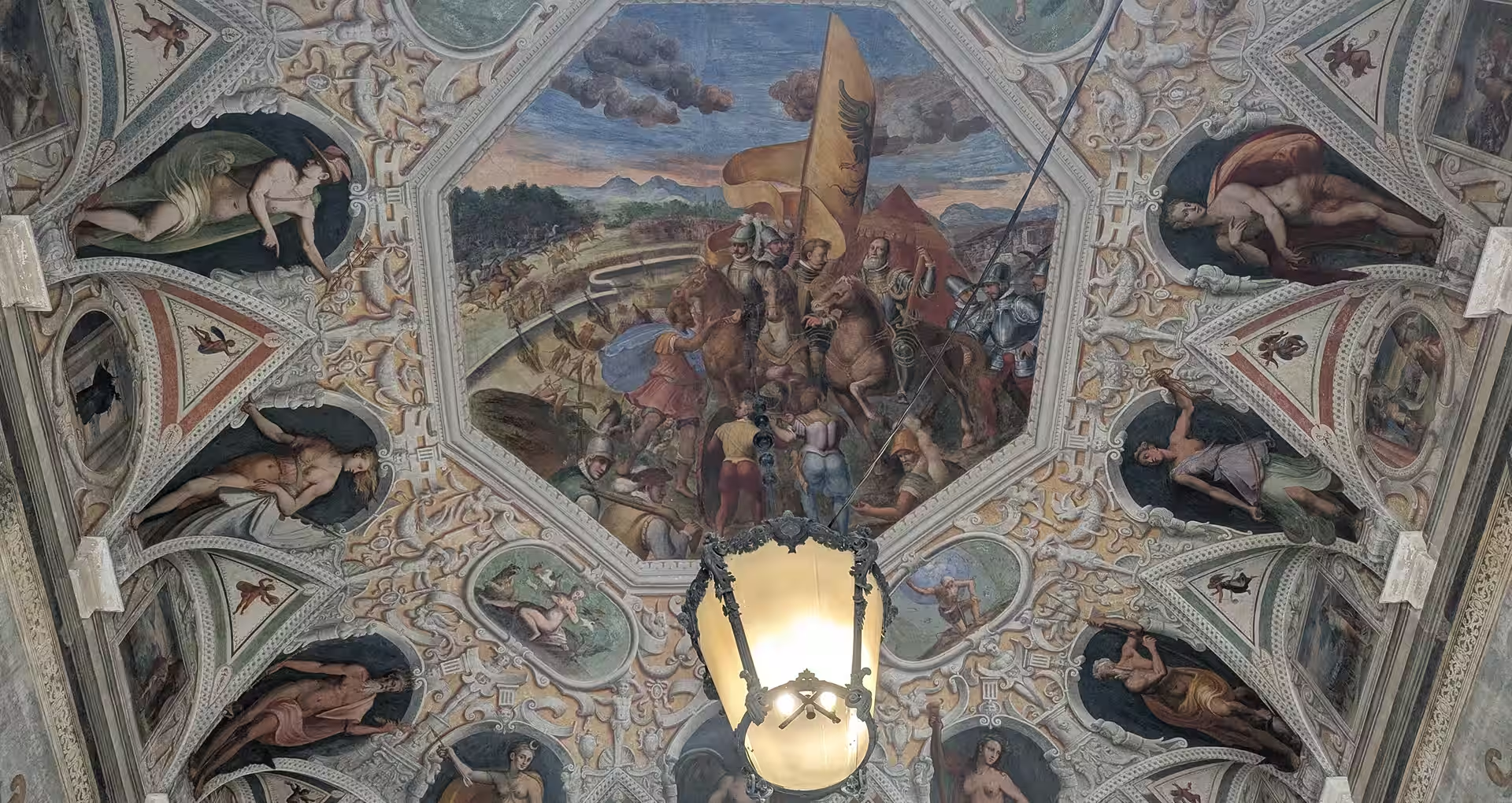
This is Genoa’s headline act and, for many visitors, the reason the city earns its UNESCO listing. In the 1500s and 1600s the great families built palaces so lavish that the Republic drew up official lists – the Rolli – ranking these private residences into tiers by their grandeur. When a dignitary arrived, a host palace was assigned by lot from the tier that matched the visitor’s rank: popes, cardinals and kings drew the most magnificent; lesser guests, the lower tiers. Some of these palaces are now open as museums.
Via Garibaldi / Le Strade Nuove (UNESCO). The “new streets” of the old aristocracy and the densest concentration of the city’s palaces — many of the 42 that make up Genoa’s UNESCO listing line this stretch. Walk it once just to look up at the façades – the Lercari-Parodi Palace, its mutilated telamons and frescoed front are a good place to start – then go inside the ones that are open as museums.
→ [Le Strade Nuove]
Via Garibaldi / Le Strade Nuove (UNESCO). The “new streets” of the old aristocracy and the densest concentration of the city’s palaces — many of the 42 that make up Genoa’s UNESCO listing line this stretch. Walk it once just to look up at the façades, then go inside where you can. → [Le Strade Nuove]
→ [Le Strade Nuove]
Palazzo Reale (Royal Palace). A full Baroque royal apartment with a Hall of Mirrors and a terrace over the port – one of the most complete in Italy. Partly closed for renovations in 2026, it is still worth a visit especially to admire its wonderful appearance from the small garden.
→ [Genoa’s museums]
Palazzo Rosso & Palazzo Bianco. Three adjoining palaces on Via Garibaldi, run as one museum on a single ticket – Genoa’s great civic art collection. Palazzo Bianco holds the European painting: Van Dyck, Rubens, Veronese, Hans Memling and Spanish masters. Palazzo Rosso keeps the Brignole-Sale family’s own collection in its frescoed state rooms – more Van Dyck portraits, a Dürer, Guido Reni – and crowns it with a rooftop terrace (Franco Albini’s celebrated mid-century redesign) holding one of the best views in the centre, free with your ticket. Palazzo Doria-Tursi, the grandest of the three and still the city hall, rounds it out with decorative arts and Paganini’s violin, il Cannone.
→ [Musei di Strada Nuova]
→ [Palazzo Rosso & Bianco]
Galleria Nazionale di Palazzo Spinola. A palace left almost exactly as its noble family lived in it, hung with the national collection. The least crowded of the big four and my quiet favourite.
→ [Palazzo Spinola]
Rolli Days. A few weekends a year – usually in May and in October – palaces normally closed to the public — private homes, banks, offices — throw open their doors for free. If your trip lines up with it, drop your plans and go. → [Genoa events calendar]
→ Go deeper: [The Rolli Palaces of Genoa — full guide]
3. Churches & sacred art
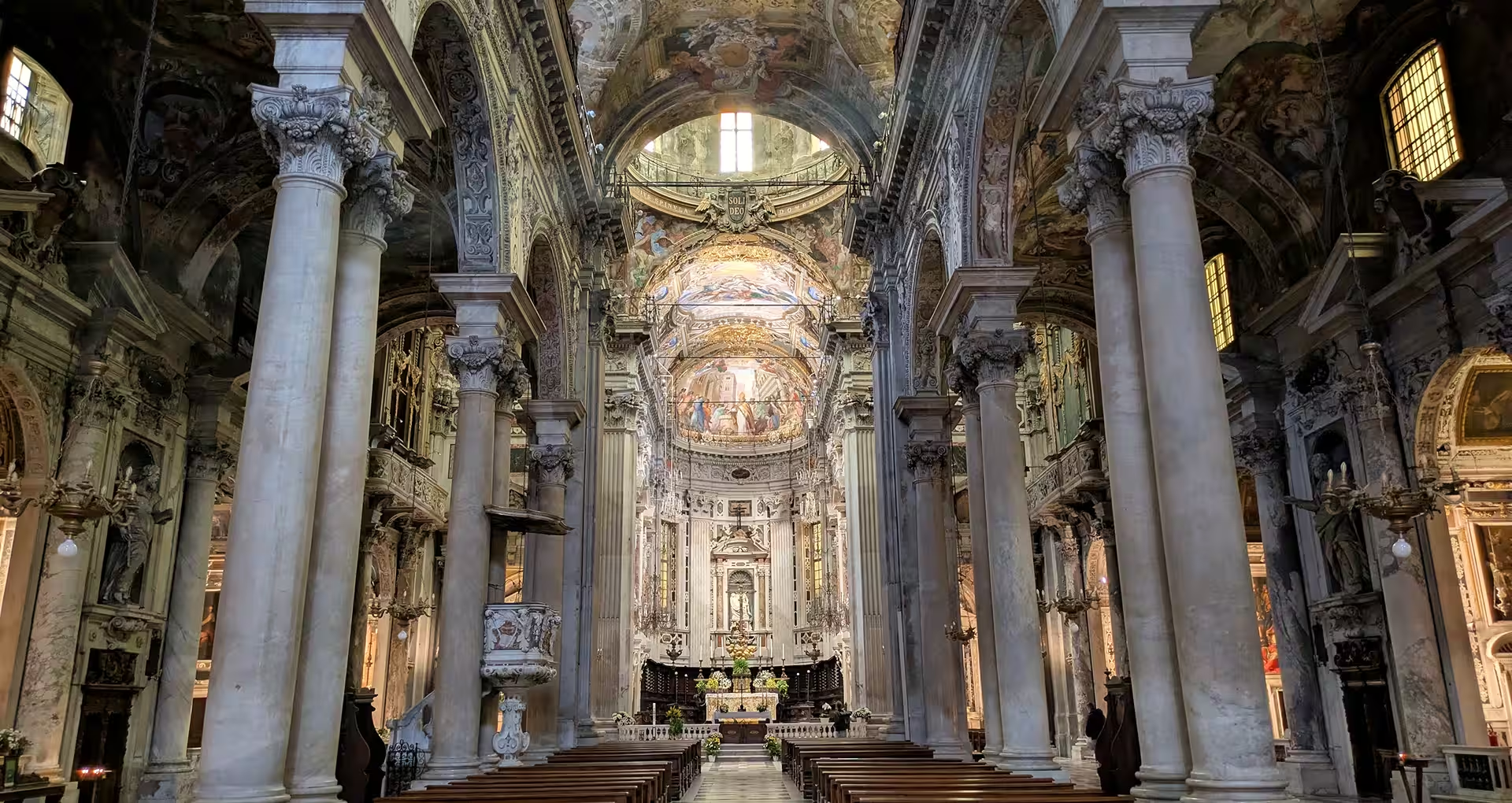
Genoa’s churches are, to me, the most underrated thing in the city — you’ll often have a masterpiece entirely to yourself. The Rolli palaces got the UNESCO listing, and that was as much a strategic choice as an artistic one: the truth is Genoa holds dozens of churches, medieval and Baroque, whose plain, often austere exteriors give nothing away. Step through the door and you find interiors of marble, gilt and fresco that can hold their own against the most celebrated churches in Italy. Beyond the cathedral, here’s where to look.
Cathedral of San Lorenzo. Covered above — the essential one, and one of the most symbolic monuments of the city.
→ [San Lorenzo]
Chiesa del Gesù. Right on the cathedral square — a dense, dark Baroque jewel-box holding two Rubens canvases and a Guido Reni. → [Chiesa del Gesù]
San Matteo. A tiny black-and-white striped church on a perfect medieval square, built as the private chapel of the Doria — the family that gave Genoa its greatest admiral, Andrea Doria. The square, the church and the surrounding Doria houses form one enclave; it’s the most atmospheric corner in the old town. → San Matteo and the Doria enclave.
Santa Maria di Castello. A Romanesque complex on the old town’s highest hill — frescoes, cloisters and a museum layered together. Quietly one of Genoa’s richest single sites. → [Santa Maria di Castello]
San Siro. Genoa’s cathedral until the seat moved to San Lorenzo over a thousand years ago — and now, after a Baroque rebuilding, a soaring interior of dark marble, fresco and gilt that most visitors walk straight past in the Maddalena quarter. → [San Siro]
Santissima Annunziata del Vastato. A sober neoclassical front giving way to one of the most lavishly gilded and frescoed Baroque interiors in Italy. The one to send a sceptic into. → [Santissima Annunziata]
And my own favourites – the ones most visitors never find.
Santi Vittore e Carlo, facing Palazzo Reale on Via Balbi; the ancient Santa Maria delle Vigne, with its Romanesque bell tower rising over the caruggi; San Damiano, beside the Giardini Luzzati; the medieval Knights Hospitaller complex of the Commenda di San Giovanni di Prè by the old port; Sant’Agnese in the Carmine quarter; and Santa Caterina – the Santuario della Santissima Annunziata di Portoria, where St Catherine of Genoa is venerated.
I could keep going for a long time – there are so many more, and so many of them are stunning. So don’t stop at this list: half the pleasure of Genoa is the church you stumble into by accident.
→ Go deeper: [Genoa’s most beautiful churches]
4. The vertical city: Views, funiculars & forts.
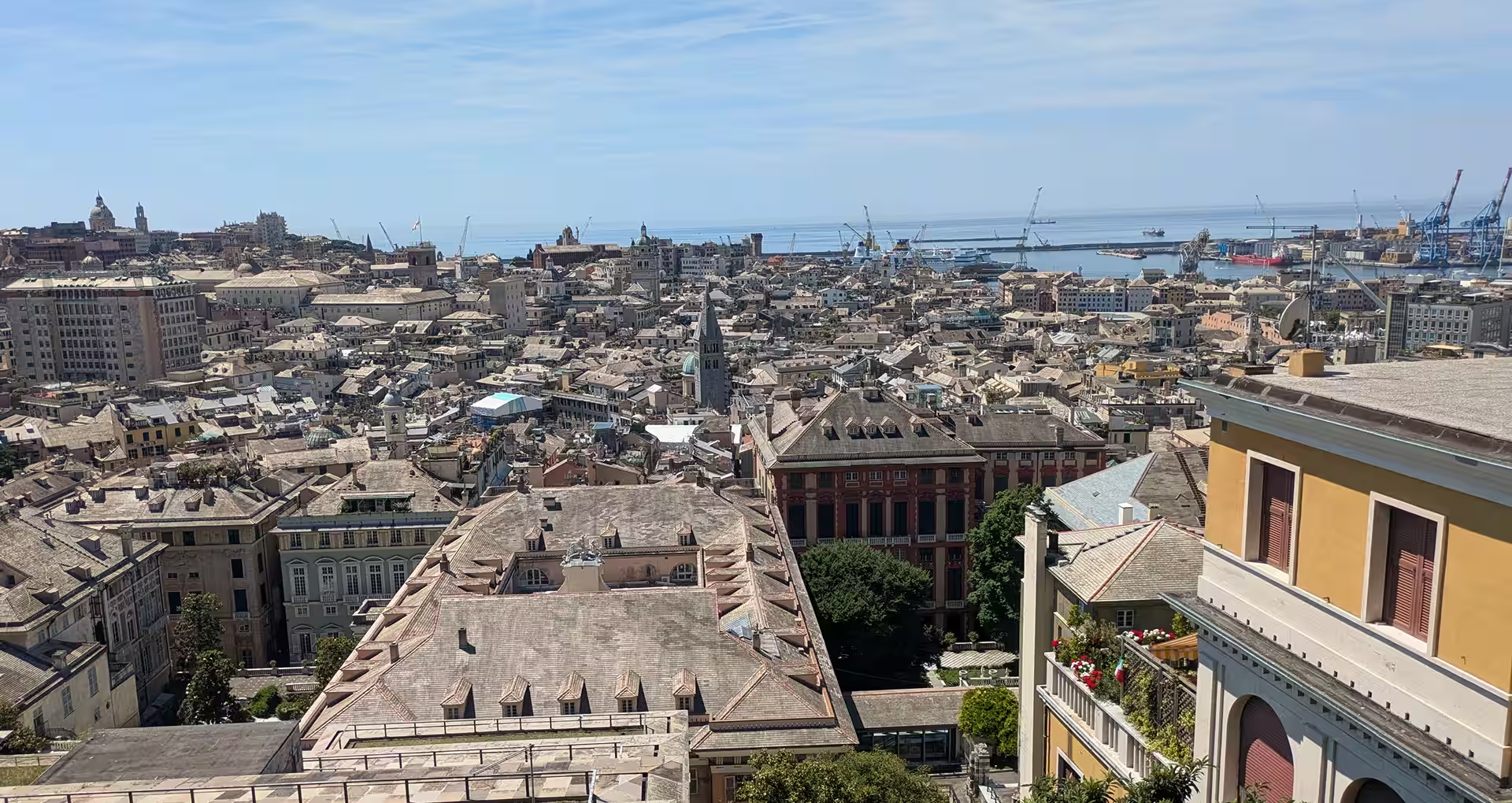
Genoa climbs, and going up is part of the pleasure – by historic lift, funicular or your own legs, with the rooftops and the sea unrolling below you as you rise.
Spianata Castelletto and the Art Nouveau lift. Ride the 1909 liberty-style elevator up from the old town to the Castelletto terrace, where Genoa unrolls beneath you. The classic first view, and it costs no more than a normal bus ticket. → Best belvederes · [Castelletto district]
Ride the funiculars and the public lifts. In Genoa the transport is an attraction in its own right. Take the Zecca–Righi funicular out of the centre to the hill of Righi, for trailheads, a panoramic restaurant and the start of the fort walks; ride the cogwheel Granarolo railway up its quiet ridge; or hunt down the Montegalletto lift, which travels horizontally through a tunnel before rising vertically to Castello d’Albertis. None of them are tourist traps – they’re how locals get up the hill. → [Genoa’s funiculars & lifts]
The Parco delle Mura and the Forte Diamante hike. Ringing the city above is a park of nineteenth-century forts linked by ridge paths along the old walls. The walk out to Forte Diamante is the standout half-day hike — big skies, the city far below, the sea beyond. → [Forte Diamante](LINK: Forte Diamante — in prep) · [Best hikes around Genoa]
Belvedere di Carignano. A residential terrace with a clean, framed view over the Foce district and the sea, the mountains rising behind the city — quieter than Castelletto and lovely at golden hour. → [Belvedere of Carignano]
Good to know: the lifts, funiculars and the Ascensore are part of Genoa’s public-transport network (AMT) — so they’re no longer free, but a single AMT ticket covers them like any bus or metro ride, and there are integrated and tourist day passes that include them. Check current fares before you go, as they change.
→ Go deeper: Belvederes & viewpoints · [Best hikes around Genoa]
5. Food & drink
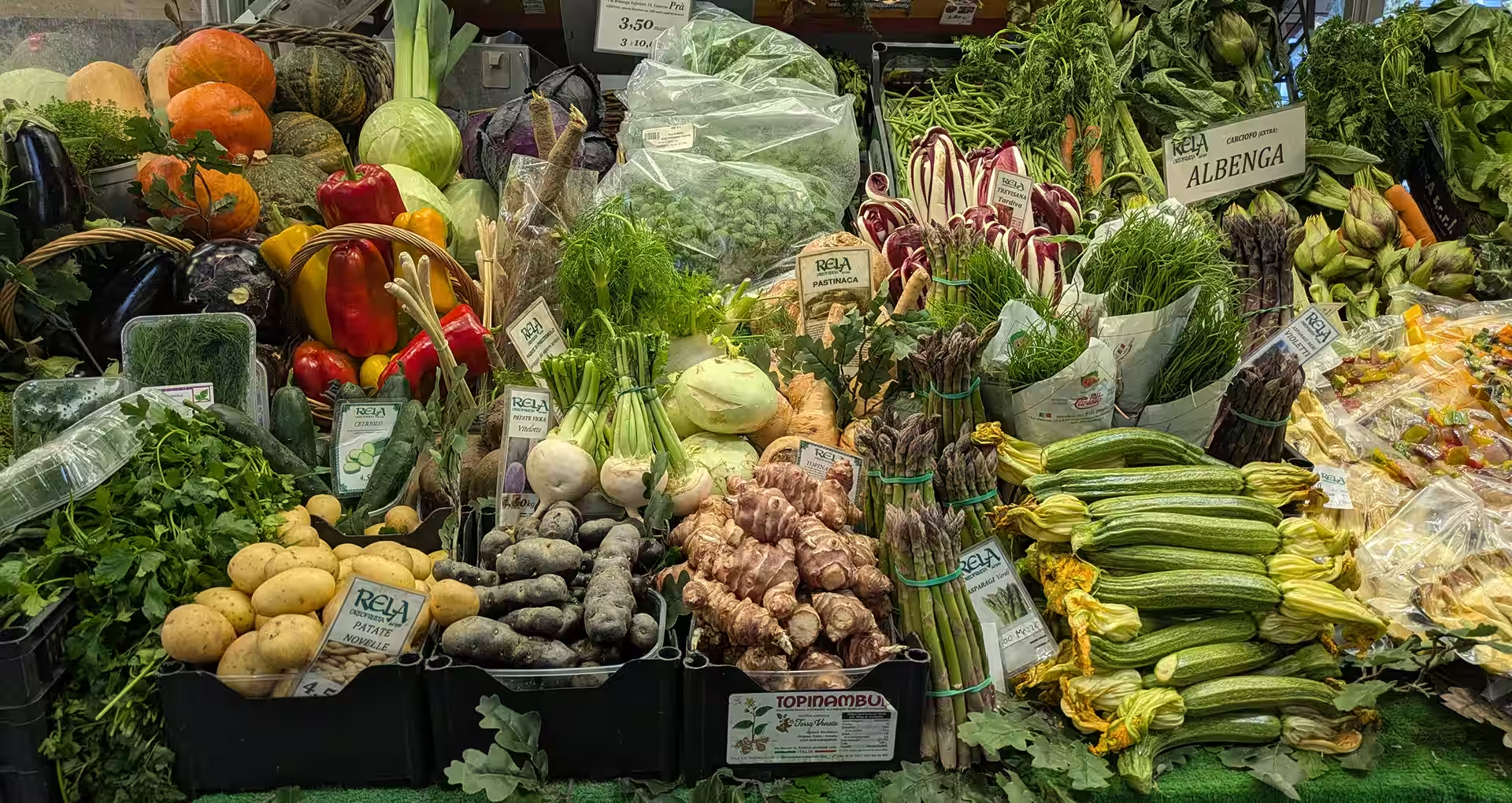
Genoa grew rich trading spices it barely cooked with. Its own kitchen stayed frugal – basil, olive oil, chickpeas, herbs from the hills, a little fish from the sea – and turned that poverty into one of Italy’s most quietly brilliant regional cuisines. The best things to eat here are cheap; you just have to know what to order.
Focaccia genovese & focaccia di Recco. The everyday focaccia genovese — dimpled, oily, salty — is breakfast for locals; the cheese-filled focaccia di Recco from along the coast is the special-occasion cousin. Buy it warm, by weight.
→ [What to eat in Genoa]
Pesto & trofie. Genoa invented pesto, and it tastes different here — basil-bright, no harshness. Order it on trofie or trenette with green beans and potato, the traditional way.
→ [Food guide]
Farinata & the sciamadde. Farinata is a thin, baked chickpea pancake, sold from old fried-food shops called sciamadde in the old town. A perfect cheap snack.
→ [Food guide]
Mercato Orientale. The city’s covered market ! produce, cheese, fish, and a renovated food hall upstairs for lunch on the spot. Go hungry.
→ [Mercato Orientale]
Aperitivo & where to drink. Genoa does aperitivo seriously, especially around Piazza delle Erbe and the old town after dark.
→ [Where to drink in Genoa]
→ Go deeper:
[What to eat in Genoa — the food guide]
6. The sea & the outdoors.
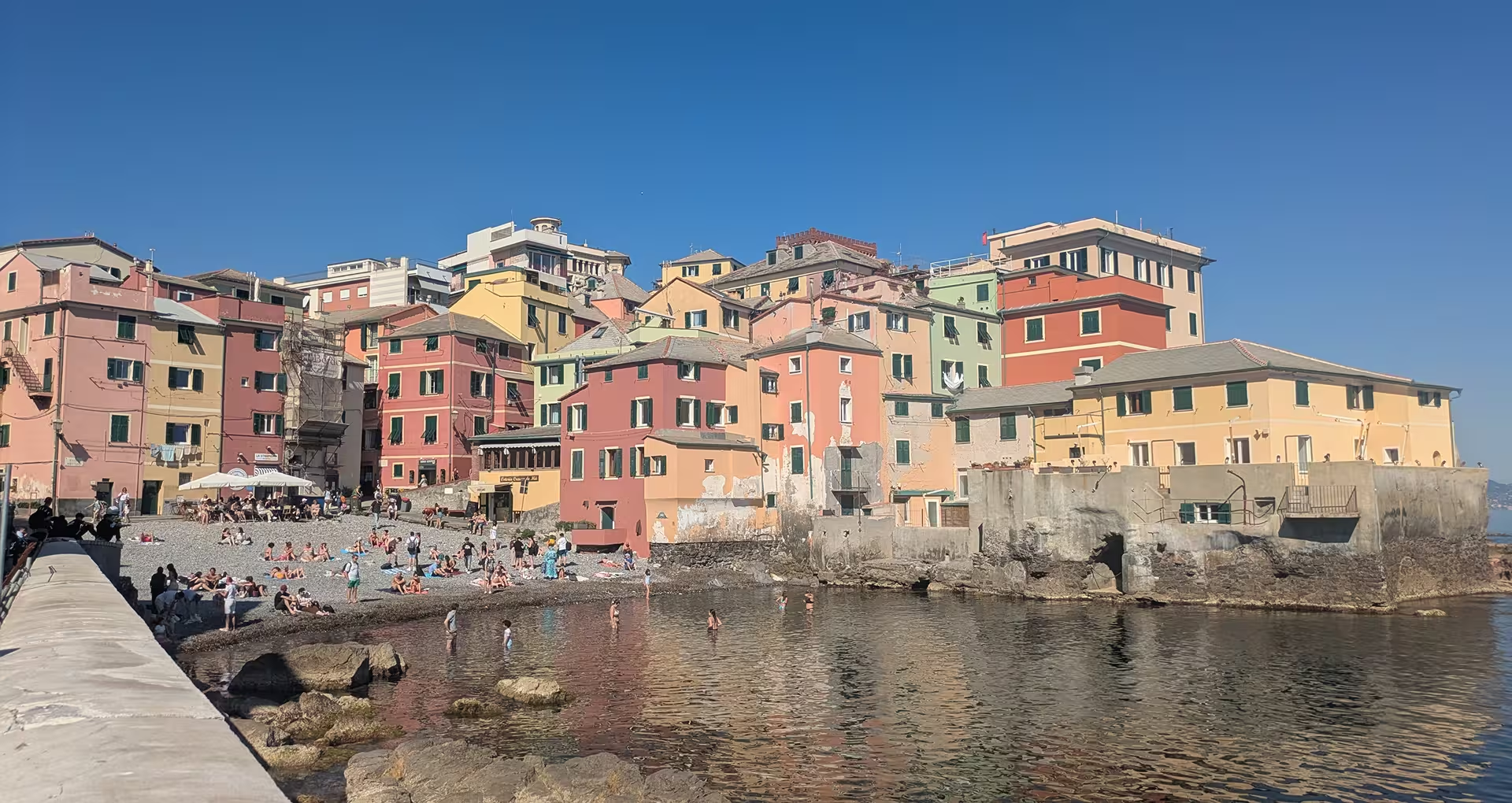
For all its density, Genoa is strung along the coast, and the seaside neighbourhoods are where locals actually relax.
Boccadasse. A former fishing village swallowed by the city but still picture-perfect — pastel houses around a pebble cove, a gelato, the sound of boats. The single most charming spot in Genoa.
→ [Boccadasse]
Corso Italia & the Lido. The broad seafront promenade running east — joggers, swimmers, sea on one side — ending near Boccadasse. The easy way to walk by the water.
→ [Corso Italia]
Nervi. A genteel seaside suburb with a cliff-edge walkway (the Passeggiata Anita Garibaldi), grand parks and art museums — a half-day escape on the city train.
→ [Nervi]
Voltri. The city’s far-western edge, where Genoa runs out into a working-class seafront of beaches, fried-fish kiosks and the green sprawl of the Villa Duchessa di Galliera park behind. Not pretty in the Boccadasse way — but it’s where locals actually swim, and the start of the climb up to the Beigua. → [Voltri & the western coast]
Beaches in and near the city. Genoa’s own beaches are modest; the good swimming is a short hop east or west along the coast.
→ [Best beaches near Genoa]
→ Go deeper: [Genoa’s coast & the outdoors]
7. Beyond the obvious — hidden gems.
This is where I’d take a friend on their second day, once the must-dos are done. The aggregators barely cover these.
Staglieno Monumental Cemetery. An open-air sculpture gallery the size of a town — extraordinary nineteenth-century funerary art, and one of the most moving, strange places in Italy. Free, and almost empty.
→ [Staglieno]
Piazza di Sarzano. The old town’s highest square, an unexpectedly wide-open space with a deep history — start here for the quieter, upper old town. → Piazza di Sarzano, History and monuments
Tower of the Embriaci. The tallest surviving medieval private tower in the city, a survivor from when Genoa bristled with them. → The Embriaci Tower
The Lanterna. Genoa’s 1543 lighthouse — one of the oldest working lighthouses in the world and the city’s emblem. You can walk out to it and climb partway up.
→ [The Lanterna]
21st-century Genoa. The new Waterfront, the street art, the unapologetically industrial edges — the living, working city, not the heritage one. The side I find most honest.
→ [Modern Genoa]
→ Go deeper: [Genoa’s hidden gems]
8. Day trips from Genoa
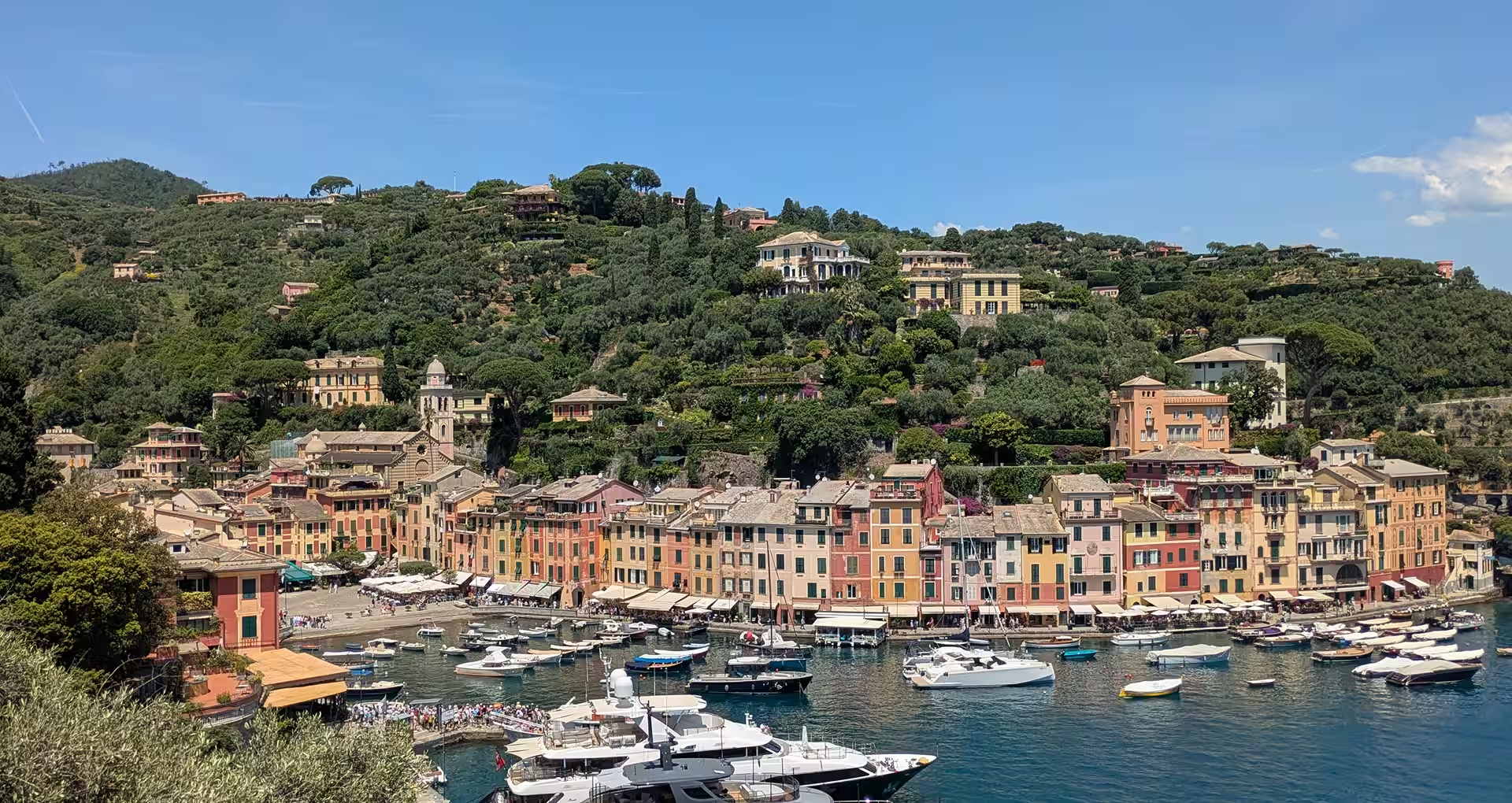
Genoa is the gateway to the Italian Riviera, and some of Italy’s most famous coast is a short train away.
Cinque Terre. The five cliff-villages need no introduction — and they’re an easy, direct train ride. Go early, go shoulder-season if you can. → [Cinque Terre from Genoa]
Portofino & Santa Margherita. The glamorous little harbour and its more relaxed, more affordable neighbour — both reachable by train and bus or boat. → [Portofino & Santa Margherita]
Camogli & San Fruttuoso. A gorgeous, less-touristed fishing town and the abbey in a hidden cove next door, reachable only by boat or footpath. My pick for a Riviera day. → [Camogli & San Fruttuoso]
Coastal boat trips. In season, boats run along the coast and out to whale-watching grounds in the Pelagos Sanctuary. → [Boat trips from Genoa]
→ Go deeper: [Best day trips from Genoa]
9. Plan your trip
The practical layer — kept short here; each links to a full guide.
How many days do you need? Two full days cover the essentials comfortably; three lets you add the sea, Staglieno and a day trip. → [Genoa itineraries: 1, 2 & 3 days]
Getting around. A compact centre you mostly walk, plus a metro line, historic funiculars, public lifts and ferries. → [Getting around Genoa]
Where to stay. The best base depends on whether you want the atmospheric (but rough-edged) old town or the calmer streets around Via XX Settembre. → [Where to stay in Genoa]
Genoa with kids. The Aquarium, the port, the lifts and the boats make it surprisingly easy. → [Genoa with kids]
Best time to visit. Late spring and early autumn are ideal; summer is hot and busy, winter quiet but atmospheric. → [Best time to visit Genoa]
Free things to do. More than you’d think — the caruggi, the cathedral, the belvederes, Staglieno and most churches cost nothing. → [Free things to do in Genoa]
→ Go deeper: [Plan your trip to Genoa]
10. Frequently asked questions.
Is Genoa worth visiting?
Yes — emphatically, if you like cities with real character over polished tourist towns that feel made for instagram. Genoa gives you UNESCO palaces, one of the largest medieval old town in Europe, serious food and an authentic working port, with a fraction of the crowds of Florence or Venice. I make the full case here. → Is Genoa worth visiting?
How many days do you need in Genoa?
Two full days for the essentials; three to add the coast, Staglieno and one day trip. With more time, you can explore it deeper and use it as a base for the Riviera. → [Genoa itineraries]
Is Genoa walkable and easy to get around?
The historic centre is very walkable but steep and maze-like. Beyond it, lean on the train, metro, funiculars and public lifts. → [Getting around Genoa]
Is Genoa safe for tourists?
Broadly yes, with normal city sense. The old town near the port can feel edgy after dark on certain alleys — fine by day, just stay aware at night. → [Where to stay & safety]
What’s the best area to stay in?
The old town for atmosphere and walkability; the area around Via XX Settembre / Brignole for calmer, more modern streets and easy transport. → [Where to stay in Genoa]