
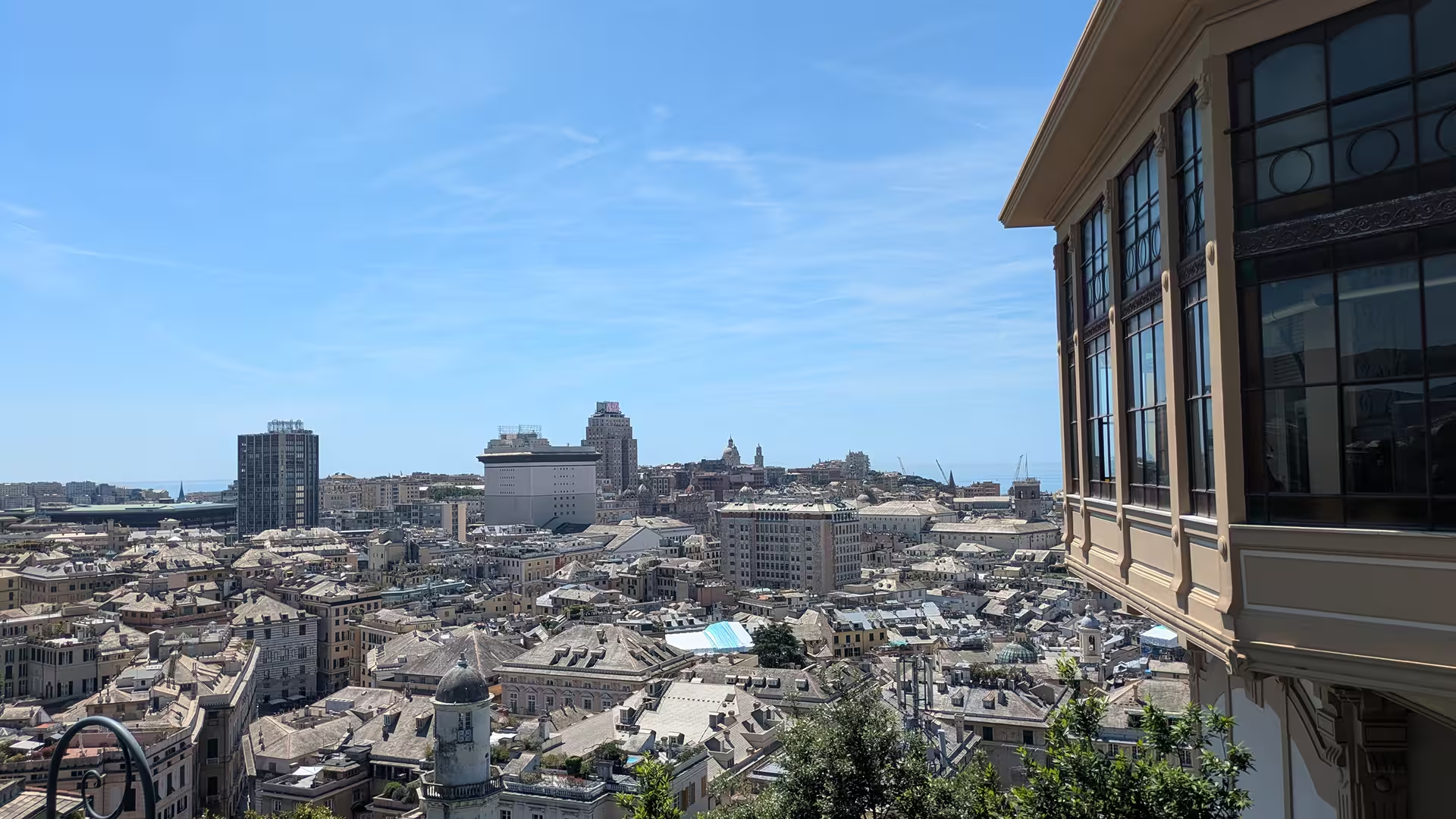
Genoa rises vertically — a dense sprawl of slate roofs squeezed between the Apennines and the Ligurian Sea. To truly grasp the essence of the city you must head upward. While dozens of spots overlook the skyline, not all views offer the same magic. I have curated this guide to the city’s best belvederes and panoramic viewpoints based on my own explorations. From the iconic terraces of Castelletto to the mountain ridges of the Righi funicular, these top picks reveal the city from its most spectacular angles. Catching a view from above is, for me, one of the essential things to see and do in Genoa — this guide is the viewpoint chapter of that bigger picture.
Spianata di Castelletto: The balcony of Genoa.
There is a reason why the Castelletto Belvedere is the most famous viewpoint in the city. Often called the “Balcony of Genoa,” this wide terrace offers a breathtaking view that captures the essence of the “Superba.” From here, the city reveals its layers. You can see the dense slate roofs of the medieval center, the towers of the Cathedral, and various churches and palaces. In the distance, the massive cranes of the industrial port stand against the sea.
Getting there is part of the experience. While you can walk up the steep creuze (brick paths), the most authentic way is to take the lift. But not just any lift: the Ascensore Castelletto is an Art Nouveau elevator built in 1909. It whisks you from the shadows of the palaces on Via Garibaldi directly into the sunlight of the belvedere.

Best time to go.
Visit just before sunset. As the lights of the port begin to flicker and the sky turns orange behind the Lanterna, you will see exactly why this spot is a classic.
Why it’s a top pick.
It is centrally located and easy to reach thanks to the historic lift, making it a perfect spot to enjoy even with limited time. It is also the best place to capture the contrast between the historic caruggi and the modern Mediterranean port. The local atmosphere – with people eating ice cream and focaccia from the nearby shops while watching the sunset – makes it a refreshing halt far from the city noise.
Porto Antico: The waterfront vantage.
The Porto Antico represents Genoa’s modern rebirth. Redesigned by Renzo Piano in 1992, it is where the city finally meets the sea. This area offers a “sea-level” perspective just as dramatic as the hilltop belvederes. Here, you are immersed in a vibrant, salty atmosphere. From the docks, you can see the contrast between the historic harbor and sleek, modern architecture.
But the area also provides unique elevated vantage points. You can board the Bigo, a panoramic lift that rises above the masts. Alternatively, visit the Eataly shopping mall for a relaxed view from its upper levels. Whether from the piers or from above, the Porto Antico captures the city’s maritime identity from every angle.

- At sea-level: Several spots allow you to look back at the city’s skyline, where the colorful houses of the historic center seem to climb over one another toward the mountains. My two favorite ones are the Calata Marinetta and the Isola delle Chiatte. You can also stroll along the Magazzini del Cotone pier; having an aperitivo on the terrace of the 752 is always a perfect way to end the day.
- From the Bigo: For a panoramic thrill, the Bigo panoramic lift – modeled after traditional harbor cranes – rotates 360 degrees as it rises 40 meters high, offering a bird’s-eye view of the Aquarium, the Lanterna, and the labyrinth of the “caruggi” for 6 euros.
- From the Shopping Mall: The upper terraces of the Eataly building and the Porto Antico mall offer a more relaxed, framed view of the harbor, perfect for watching the luxury yachts and ferries glide past against the backdrop of the open Mediterranean.
Carignano: The aristocratic perspective.
Moving south of the city center, the Carignano district offers a more structured, elegant view of Genoa. Dominated by the massive white dome of the Basilica di Santa Maria Assunta, this hilltop neighborhood provides a distinct vantage point over the Sarzano district, the port and Foce.
The best spot here is the Belvedere di Carignano, located near the bridge. Unlike the intimate feel of the medieval center, Carignano is characterized by wide, tree-lined avenues and grand 19th-century architecture. From the top of the Ponte di Carignano-a 17th-century bridge that spans a valley of houses-you get a dizzying sense of the city’s unique verticality.

Alternative viewpoints include the Carignano Bridge (via Eugenia Ravasco), which offers a view of the modern skyline – giving it a slight “Manhattan Central Park” feel. There is also the Piazzale di San Francesco d’Assisi, an elegant belvedere surrounded by beautiful buildings. While the construction of new buildings has distanced it from a direct view of the sea, it is elegant place that still provides a panorama of the Waterfront area and the old city beyond. Its coffee place makes it a nice spot for an afternoon break.
 Belvedere of the piazzale di San Francesco d’Assisi.
- View from the Carignano Bridge.


The Fort Path: A 360-degree mountain vista.
For a view that captures the immense scale of the city, nothing beats the ridgeway path through the Parco delle Mura. Standing on this mountain backbone, you are suspended between the sky and the sea, experiencing the true mountainous character of Genoa. To one side, the path offers a dizzying perspective of the industrial and historic ports, where the massive ships look like miniatures against the blue of the Mediterranean. To the other, the gaze sweeps over the wild, green silence of the interior valleys.
The true highlight is the view of the massive fortifications that define the horizon. From the trail’s natural observation platforms, you can see the 17th-century walls snaking for miles across the peaks. On one peak culminates the unmistakable, star-shaped silhouette of Forte Diamante perched on the highest ridge. It is the only place where you can fully appreciate Genoa’s unique character as a formidable fortress-city, using the rugged Apennine crags for its defense.
Note: while reaching the start of the Fort Path is easily manageable, the full hike takes several hours.

La Lanterna: The harbor panorama view.
From the first terrace of the Lanterna, the panorama offers a gritty, authentic look at Genoa’s dual identity. At 60 meters above sea level, you are high enough to see the contrast between the dense cluster of slate roofs in the old town and the sprawling mechanical landscape of the modern port. It is a working view where the wake of incoming ferries meets the silent silhouette of the Apennines and, on the clearest days, the distant, snow-capped peaks of the Alps to the west. This perspective provides a sense of the city’s verticality without losing the detail of the ships docked directly below.

While these spots are the some of the most iconic, they are only the beginning. Genoa’s vertical geography means that as soon as you climb its slopes, you will encounter hundreds of hidden vistas. From narrow gaps between buildings to small neighborhood terraces and quiet street corners, a new view of the sea, the city, or the mountains waits around every bend. Use these picks as your starting point, but the true spirit of the city is found by walking the creuze and discovering your own favorite viewpoint.